
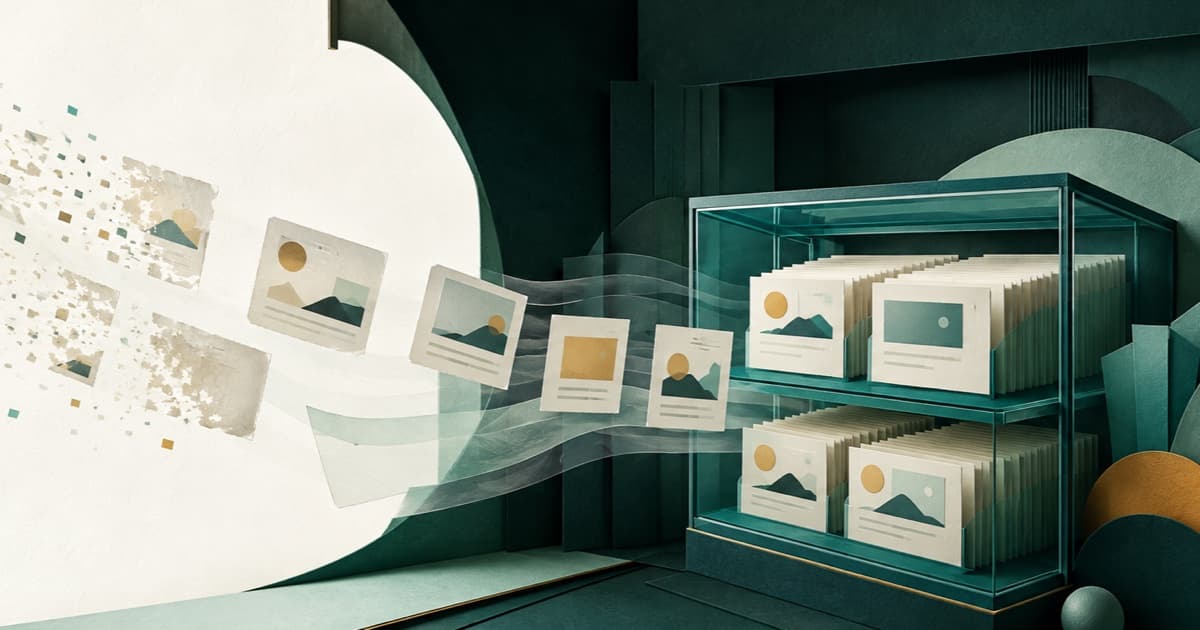
Public ad references are temporary by nature. Campaigns end, platforms rotate media URLs, advertisers remove assets, and a once-useful link can become an empty record. If the reference supported a brief, audit, or long-running category study, that disappearance can erase more than an image. It can erase the evidence behind a decision.
What a broken source costs
A broken link separates the team’s notes from the artifact they describe. Reviewers can no longer verify the observation, compare the execution, or understand why the example belonged in a collection.
The loss compounds over time. A collection may still say “strong proof transition,” but without the creative, the phrase becomes an unsupported memory.
Preserve the research object, not only the URL
A durable record should keep the eligible creative media together with the original source URL, advertiser, observation date, format, and research notes. The source remains essential even when it stops resolving because it documents provenance.
Where appropriate, record who saved the reference and the rights basis or internal policy that allowed preservation. This is especially important when a collection may later be exported or shared.
Preservation does not create permission
Archiving a creative does not transfer copyright, trademark rights, publicity rights, or permission to republish it. Access should remain private by default, and the ability to share or download should be controlled deliberately.
- Save only material you are authorized to preserve.
- Do not bypass access controls, paywalls, authentication, or technical protections.
- Keep attribution and source context attached.
- Limit external sharing to the audience and purpose your rights basis permits.
- Remove archived objects when the account or policy requires deletion.
Build lifecycle controls before scale
Storage is not complete when uploads work. A production archive also needs quotas, ownership checks, authenticated reads, deletion queues, retry behavior, failure visibility, and a defined response when paid access ends.
These controls prevent a quiet failure mode where database records disappear but private objects remain indefinitely. They also let the product communicate clear limits instead of promising an undefined “unlimited” archive.
Distinguish archival status from source status
An archive can be ready while the source is unavailable, or it can fail while the source still works. Show these states separately. A useful interface explains whether preservation is queued, processing, ready, failed, or no longer included with the current plan.
This distinction also improves support. “The original URL expired” and “the archive worker failed” are different problems with different remedies.
Use the archive as evidence, not a trophy cabinet
The strongest reason to preserve a reference is continuity of analysis. Durable media allows a team to revisit a pattern after a campaign cycle, compare how a category changed, or understand the source behind an old decision.
The goal is not to accumulate more third-party creative. It is to keep a smaller set of authorized, well-documented research objects intact for as long as they remain useful and lawful.
SwipeTrove Pro uses private, quota-controlled media archiving to support that continuity. Archive availability remains subject to the published plan, retention, technical, legal, and rights-enforcement limits. Review the current Free and Pro boundaries.